01
At a glance
- Company
- Ideal Turf
- Industry
- Artificial turf installation
- Role
- SEO & Marketing Manager
- Engagement
- March 2020 to September 2024
- Measurement period
- March 1, 2020 to October 1, 2022
- Analytics source
- Universal Analytics
- Scope
- Technical SEO, Local SEO, information architecture, content strategy, on-page SEO, internal linking, link building, analytics and reporting
02Context
The challenge
Ideal Turf was expanding across multiple markets, but the website needed a structure capable of supporting that growth.
The challenge was not simply to publish more location pages. Each market needed useful, locally relevant content without creating a collection of repetitive pages. Services, applications, locations and educational resources needed to work together as one search system.
The strategy also had to produce business results. Traffic mattered, but quote requests and inquiries were the more important measures of success.
03Role
What I was responsible for
I owned the organic-search program from research through implementation and iteration.
- SEO and content audits
- Website architecture
- Local and multi-location SEO
- Service and location-page strategy
- Keyword and search-intent research
- On-page optimization
- Content planning, writing, editing and publishing
- Internal-link development
- Link-building strategy and campaign management
- Google Business Profile support
- Performance reporting
- Conversion tracking and analysis
- Ongoing prioritization based on traffic and lead data
This was not a one-time audit followed by a handoff. I worked directly on the website and continued refining the strategy as Ideal Turf expanded.
04Decision
Building the search architecture
The website needed to represent three connected dimensions of the business:
- 1 · OfferingWhat Ideal Turf offered
- 2 · GeographyWhere it operated
- 3 · NeedWhich customer needs and applications each offering served
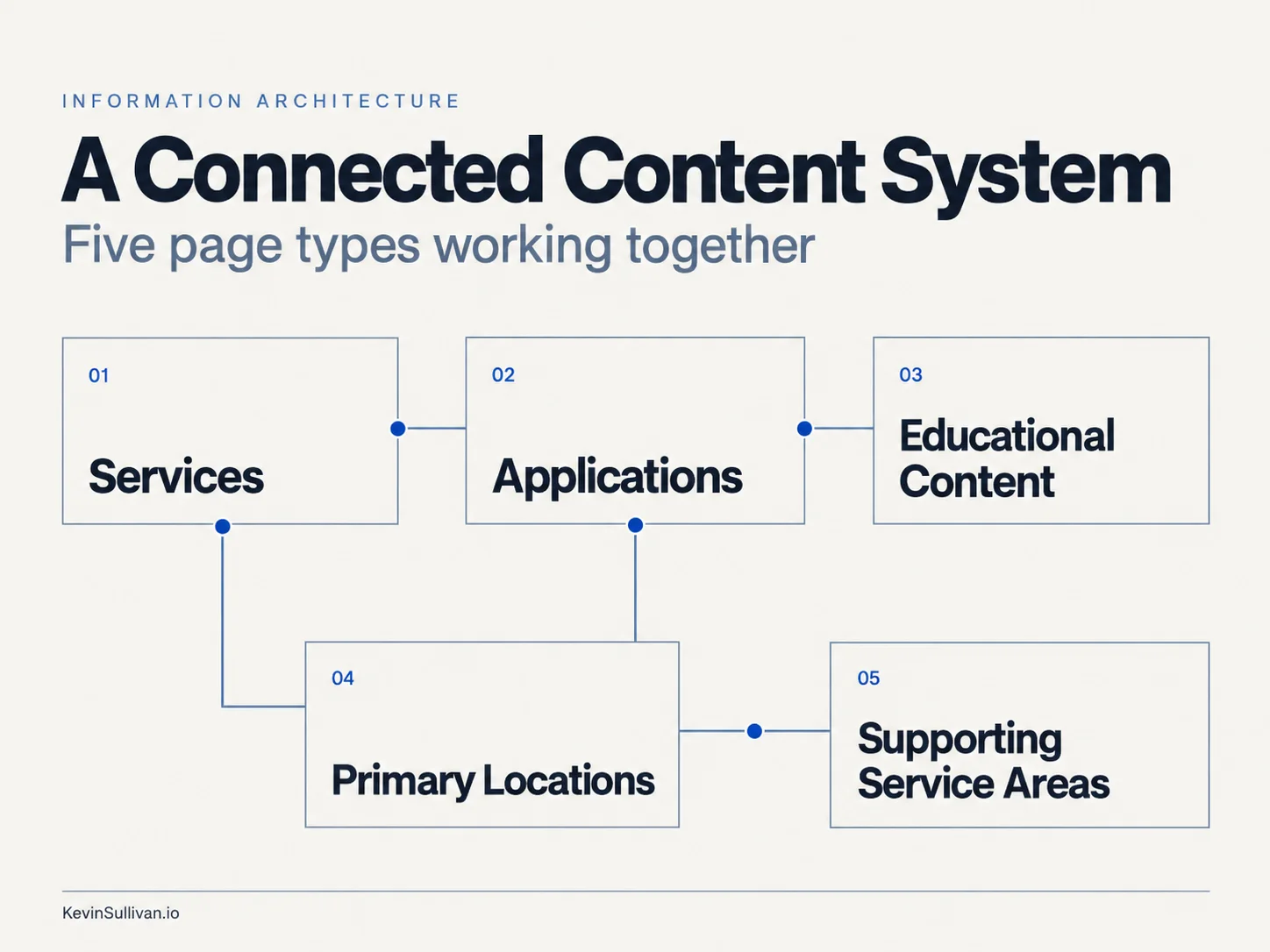
I organized the site around relationships among:
- Services
- Artificial-turf applications
- Products
- Primary locations
- Supporting service areas
- Educational resources
- Conversion paths
The goal was to give each page a clear purpose while helping search engines understand how the pages related to one another.
05Execution
Scaling Local SEO without relying on duplicated pages
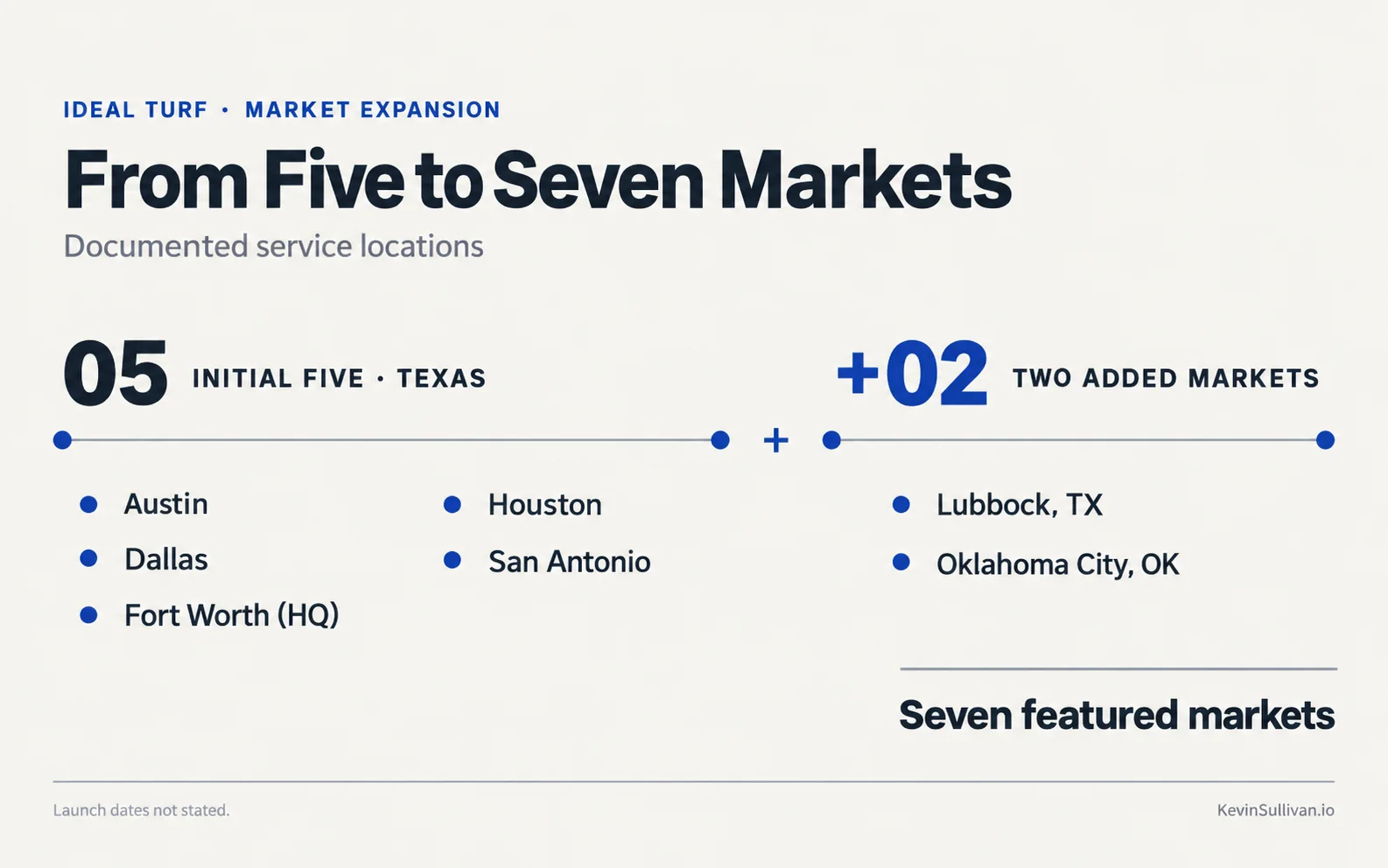
Ideal Turf expanded from five to seven markets during the engagement. That growth required a repeatable local-search structure. It also created a risk: location expansion can easily produce thin, repetitive pages that differ only by city name.
I developed location and sub-location strategies that connected local intent to relevant services and applications. The work included:
- Establishing primary location pages
- Creating supporting service-area coverage
- Aligning local pages with the services available in each market
- Developing locally relevant content
- Improving Google Business Profile signals
- Strengthening links between service, application and location pages
- Creating clearer paths from local search entry points to quote requests
The result was an architecture that could expand without treating every location as an isolated mini-site.
06Execution
Building a content system around customer intent
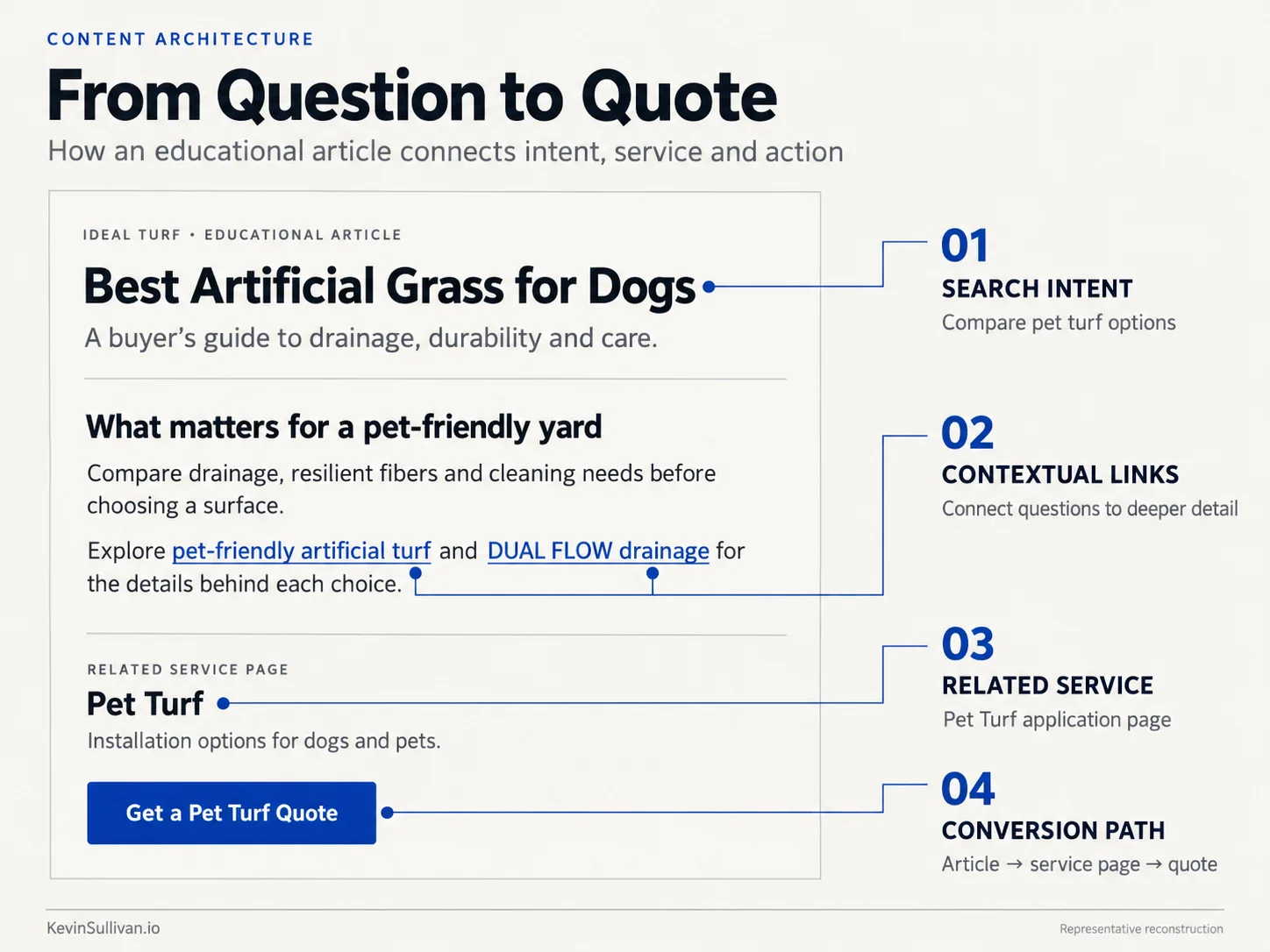
Content was planned around the questions and decisions prospective customers faced before requesting a quote. Instead of treating the blog as a collection of disconnected keywords, I used supporting content to strengthen the commercial site structure.
Topics addressed areas such as:
- Product and application selection
- Installation considerations
- Maintenance
- Costs and project planning
- Comparisons
- Use cases
- Local considerations
- Questions that commonly delayed a purchase decision
I wrote, edited, optimized, illustrated and published the content. I also developed internal links that connected educational pages to the most relevant services, applications and locations.
This allowed informational content to support commercial discovery instead of competing with it.
07Execution
Strengthening on-page relevance and authority
Architecture created the foundation, but individual pages still needed to communicate their purpose clearly. I improved:
- Page titles and descriptions
- Heading structure
- Search-intent alignment
- Service and application language
- Internal anchor text
- Calls to action
- Relationships among related pages
- Thin or overlapping content
- Conversion paths from organic landing pages
I also managed a structured link-building program designed to earn relevant, carefully reviewed placements rather than maximize link volume.
Performance data determined where to focus next. Pages with increasing visibility but weak click-through rates required a different response from pages attracting traffic without generating inquiries.
08Outcome
Results
The strategy produced substantial improvements in both organic visibility and lead generation.
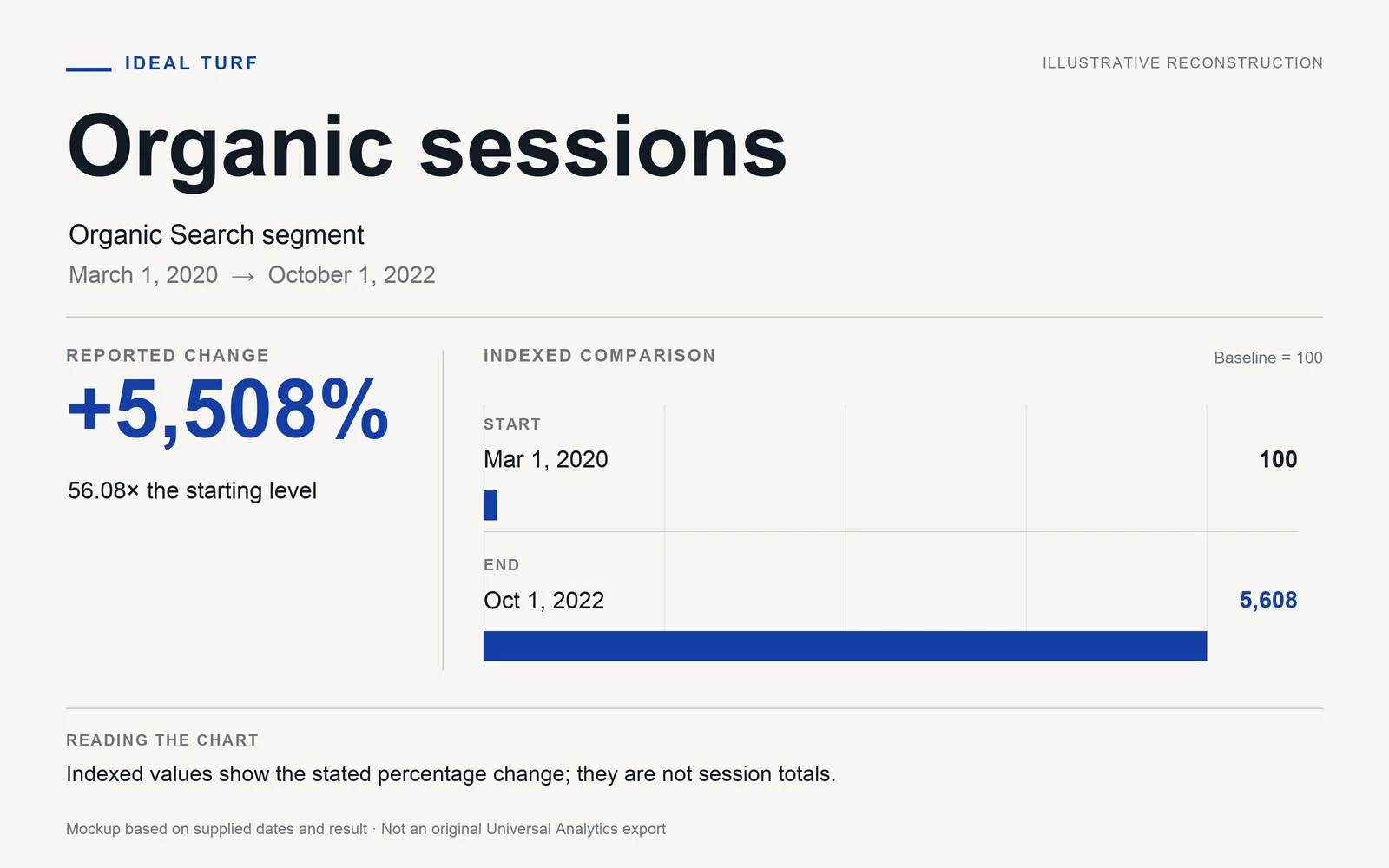
Organic sessions
Organic sessions grew by 5,508% during the measurement period. This reflects first-party Universal Analytics sessions attributed to organic search.
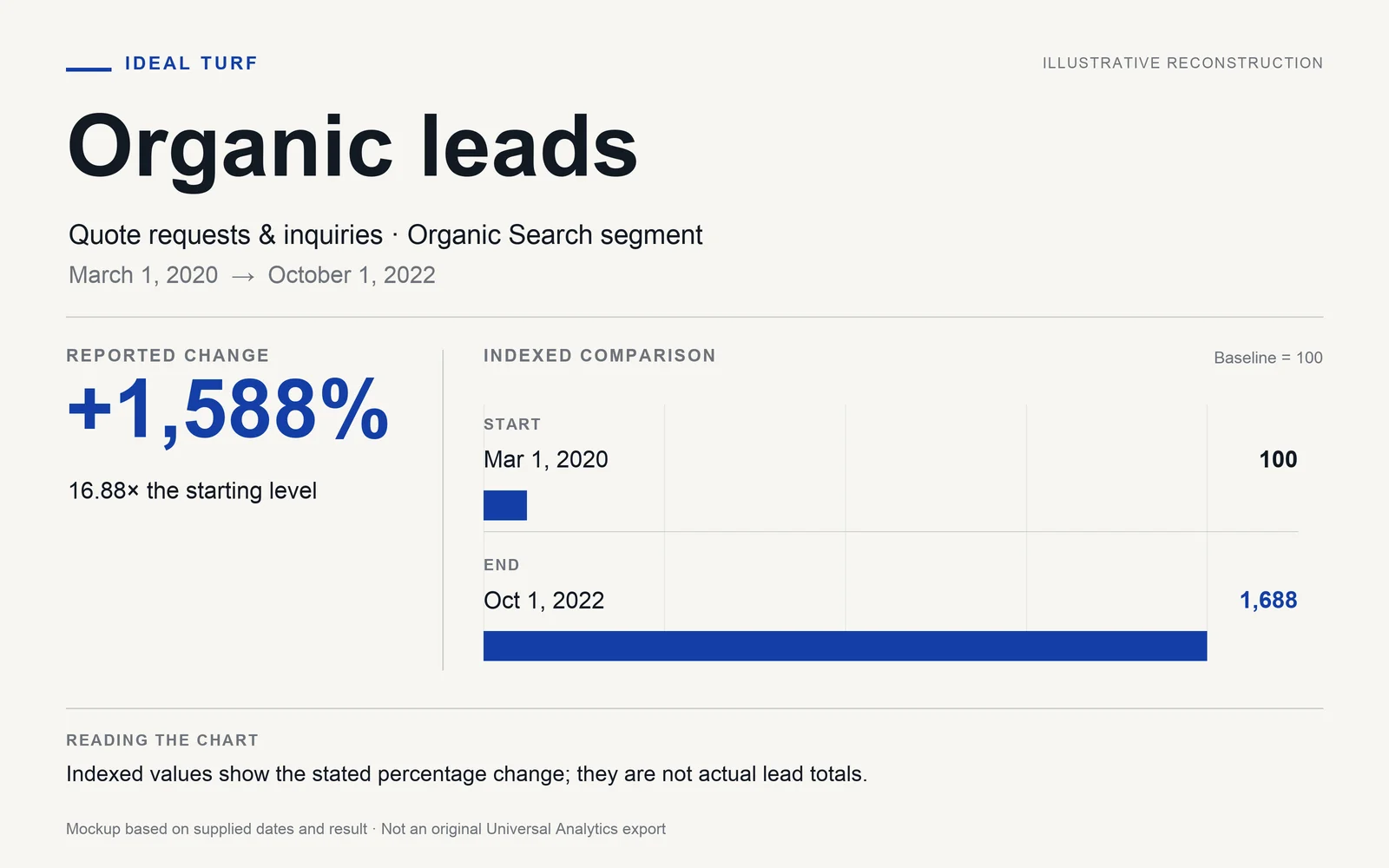
Organic leads
Organic leads were defined as quote requests or inquiries directly attributable to organic search.
This was the primary business outcome. The program was intended to create qualified opportunities, not simply increase visits.
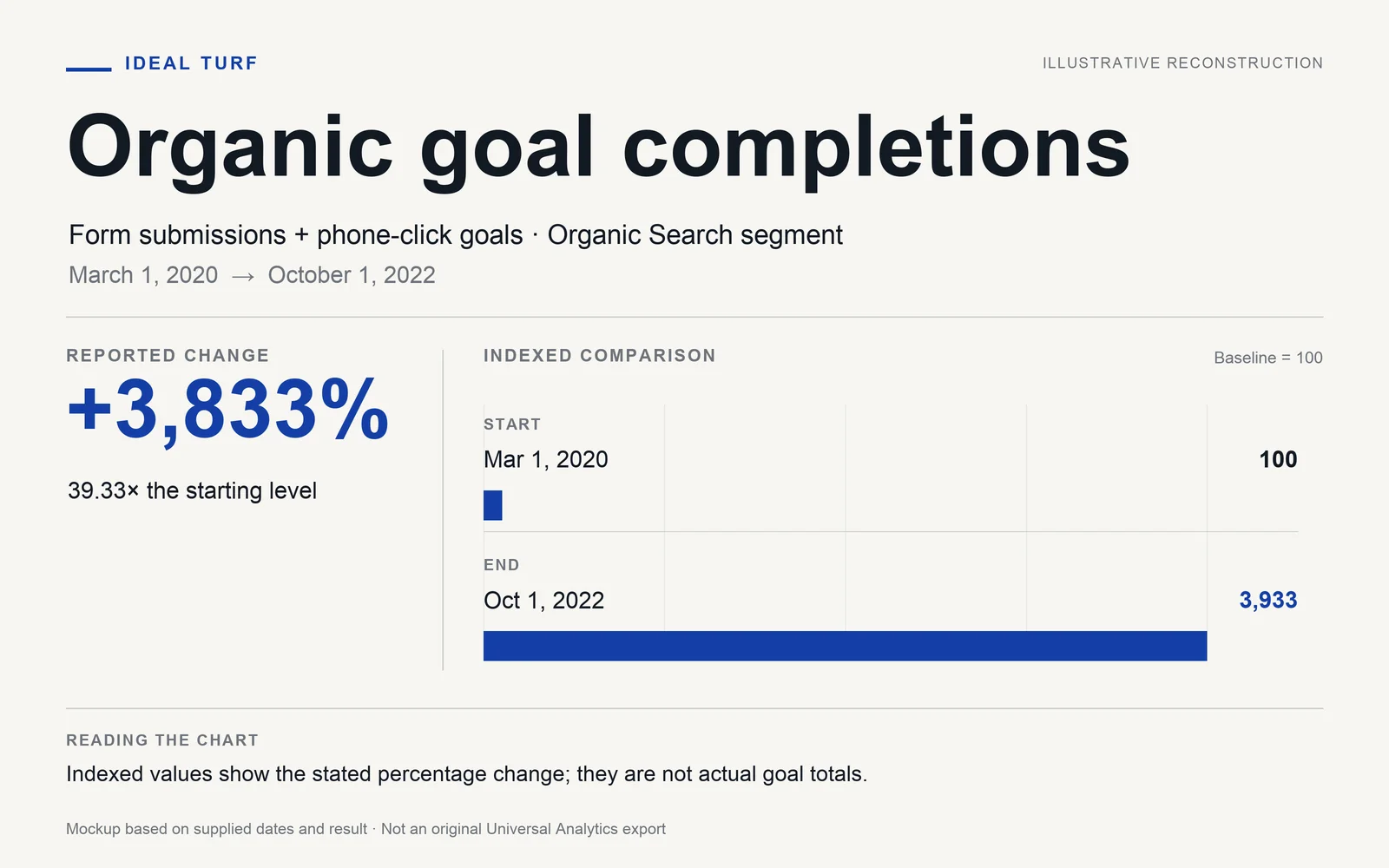
Organic goal completions
An organic goal completion occurred when a visitor from organic search submitted a form or clicked a tracked phone number to call.
Tracking both actions provided a broader view of organic conversion activity than form submissions alone.
Markets
The search architecture supported expansion into two additional markets without abandoning the underlying service, application and content model.
Location growth was therefore not a separate SEO initiative. It was built into the structure of the program.
09Method
How the results were measured
The three primary performance metrics came from Universal Analytics.
| Metric | Definition |
|---|---|
| Organic traffic | Sessions attributed to organic search |
| Organic leads | Quote requests or inquiries directly attributable to organic search |
| Organic goal completions | Form submissions or tracked phone-number clicks completed by visitors from organic search |
| Measurement period | March 1, 2020 to October 1, 2022 |
| Peak period | October 2022 |
Third-party tools such as Ahrefs were used to observe keyword coverage and broader search visibility. Those estimates are supporting evidence only and are not presented as verified traffic.
10Limitations
Why the case study ends at October 2022
October 2022 represented the program’s peak during the continuous investment period.
After that point, marketing investment became intermittent. That introduced a material variable into later performance and made the earlier period a clearer representation of what the strategy produced under sustained execution.
For that reason, this case study uses October 2022 as the end of the primary measurement window, even though I continued working with Ideal Turf until September 2024.
11
What I learned
Multi-location SEO is an architecture problem
Adding city pages is not a complete multi-location strategy. The business needs a structure that explains how services, applications, locations and service areas relate to one another.
Traffic and leads must be evaluated separately
A page can increase organic sessions without producing meaningful business activity. Tracking quote requests, inquiries, form submissions and phone clicks kept prioritization connected to actual outcomes.
Supporting content needs a defined role
Educational content performed best as part of the larger information architecture. Its job was not only to rank. It needed to answer a customer question, reinforce a commercial topic and guide the visitor toward a relevant next step.
Consistent execution compounds
The program combined architecture, content, on-page improvement, internal linking, local optimization, authority development and measurement. No single tactic explains the outcome. The results came from improving the system over time.
12
What this project demonstrates
This project shows my ability to:
- Own a multi-year organic-search program.
- Build scalable multi-location information architecture.
- Connect technical, content, Local SEO and authority strategies.
- Perform hands-on implementation.
- Measure SEO against leads and conversion actions.
- Use performance data to prioritize ongoing work.
- Support business expansion without sacrificing information quality.
- Translate a complex search program into measurable business outcomes.